
90s Rave Fashion: The Electric Origins of Modern Festival Style
Step into a dark warehouse in 1994 — strobe lights flicker, bass thunders through the concrete, and a blur of neon bodies dances beneath smoke and lasers. Baggy jeans swish with every move, kandi bracelets glint under blacklight, and visors flash rainbow reflections.
That’s the unmistakable pulse of 90s rave fashion — a look that wasn’t just about clothes but about freedom, unity, and self-expression.
Fast forward to 2025, and those same oversized silhouettes, glow accessories, and DIY designs are back in full force. But what made 90s rave fashion so iconic, and why does it still captivate a new generation of festival-goers? Let’s dive into the colors, chaos, and culture that defined an era.
What Is 90s Rave Fashion?
90s rave fashion was a wild mix of streetwear, DIY creativity, and futuristic fantasy — an aesthetic born from the underground dance movement.
It wasn’t about trends or luxury labels. It was about comfort, individuality, and visual energy — a way for ravers to express freedom on the dance floor.
Common elements included:
- Bright neon colors that glowed under blacklight
- Baggy jeans, cargo pants, and oversized tees for all-night movement
- Reflective materials that caught the strobe lights
- Playful accessories like visors, pacifiers, and kandi bracelets
- Platform sneakers and Doc Martens that grounded every step in style
It was bold, chaotic, and unapologetically loud — the perfect reflection of the rave scene itself.
The Cultural Backdrop: Rave Scene Origins
To understand 90s rave fashion, you have to understand where it came from.
The movement began in the late 1980s with the rise of acid house and techno in the UK. Underground warehouse parties spread like wildfire, powered by music, light, and community.
By the early 1990s, this energy had exploded globally — from Manchester’s Haçienda Club to the fields of California and Berlin’s techno bunkers.
Fashion was a natural extension of the scene. Ravers didn’t dress to impress — they dressed to belong, to express, and to move.
The unspoken motto? PLUR — Peace, Love, Unity, and Respect.
Every glow stick, every smiley face patch, and every candy-colored outfit was a symbol of that ethos.
Key Fashion Elements of 90s Rave Style
If you want to picture 90s rave fashion, think part streetwear, part cyberpunk, part fantasy. Here are the pieces that defined the look:
1. Baggy Pants & Cargo Trousers
Baggy jeans were the uniform of the rave floor. They provided freedom of movement and ventilation during all-night dance marathons. Brands like JNCO and Kikwear became cult favorites.
Many ravers personalized theirs with reflective tape, patches, or graffiti — turning comfort into art.
2. Neon & Glow Gear
No rave outfit was complete without neon. From UV-reactive crop tops to fluorescent fishnets, bright hues symbolized energy and togetherness.
Glow sticks, LED accessories, and even glow-in-the-dark body paint transformed the crowd into a living light show — the human extension of the music’s pulse.
3. Crop Tops, Mesh Shirts & Bralettes
Gender norms didn’t apply in the 90s rave world. Both men and women sported mesh tops, sports bras, and cropped tees.
The look was playful, body-positive, and liberating — about feeling the music, not hiding behind clothes.
4. Kandi Bracelets & DIY Jewelry
If there’s one accessory that defined the era, it’s kandi — colorful plastic bead bracelets exchanged as symbols of friendship and PLUR.
Ravers often handmade these accessories, each with unique messages or patterns. Trading kandi wasn’t just cute — it was ritual, connection, and kindness in wearable form.
5. Platform Sneakers & Doc Martens
Shoes were all about comfort and character. Buffalo platform sneakers gave height and drama, while Doc Martens added a grunge edge.
Some even customized their shoes with reflective tape or glow laces to keep the look vibrant from dusk till dawn.
6. Bucket Hats, Visors & Goggles
Headgear was essential. Reflective visors, bucket hats, or even gas mask goggles weren’t just fashion — they were protection against strobe lights, sweat, and the chaos of a crowd.
Plus, they looked incredibly cool under the flashing lights.
7. Statement Outerwear
Oversized bomber jackets, shiny windbreakers, and PVC coats kept ravers warm when the warehouse party spilled into the streets at dawn.
Metallics, holographics, and vibrant nylon fabrics defined outerwear — futuristic even by today’s standards.
The Meaning Behind the Madness: What 90s Rave Fashion Represented
Beneath the neon and noise, 90s rave fashion carried a message.
It represented freedom from conformity. In a world of minimalist 90s fashion (think Calvin Klein and Gap), ravers went the opposite way — choosing chaos, color, and creativity.
It also represented community. You didn’t need to be rich, thin, or trendy to be stylish. The only rule was authenticity.
Every outfit told a story — of rebellion, joy, and connection. It was clothing as emotion, movement, and belonging.
From Underground to Mainstream: The Evolution of Rave Wear
By the mid-1990s, rave fashion began infiltrating pop culture.
Artists like The Prodigy, Chemical Brothers, and Daft Punk made the aesthetic mainstream. Music videos, MTV clips, and clubwear brands began commercializing the look — neon, mesh, and reflective gear hit retail racks.
Meanwhile, the cyber-rave subculture took the aesthetic even further — metallic fabrics, furry boots, and UV accessories became staples at events like Gatecrasher and Creamfields.
What started as underground rebellion became an international fashion language.
Rave Fashion Revival: 90s Aesthetics in 2025
Fast-forward to today — and the 90s are back with a vengeance.
Modern rave and festival culture draw heavily from those vintage looks. The same elements — neon, baggy fits, and futuristic accessories — now appear in TikTok trends, streetwear collabs, and festival styling guides.
Here’s how 90s rave fashion is living its second life in 2025:
- Y2K revival & cybercore aesthetics: Influencers blend 90s rave with futuristic streetwear.
- Sustainability trend: Vintage rave clothing is thriving on Depop and Etsy.
- Tech-enhanced ravewear: LED jackets, reactive fabrics, and smart accessories bring new life to the old look.
- Gender-neutral fashion: The fluidity of 90s rave style aligns perfectly with today’s inclusivity in fashion.
Brands like Cyberdog, Dolls Kill, and iHeartRaves are keeping the rave spirit alive — mixing nostalgia with modern edge.
How to Recreate the 90s Rave Look Today
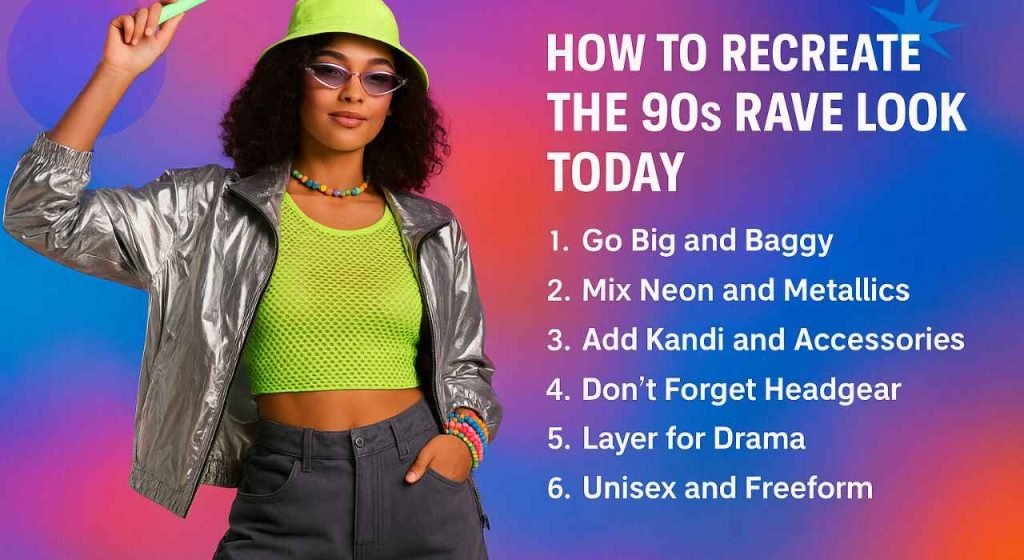
Want to channel 90s rave energy in your next festival outfit? Here’s how:
1. Go Big and Baggy
Swap your skinny jeans for wide-leg cargos or JNCO-inspired pants. Movement and comfort come first.
2. Mix Neon and Metallics
Pair a metallic crop top or reflective jacket with neon fishnets or accessories. The goal: stand out under UV lights.
3. Add Kandi and Accessories
Handmade kandi bracelets, colorful beads, or even chokers add that authentic DIY vibe.
4. Don’t Forget Headgear
Visors, fuzzy hats, or even light-up goggles add playful detail and nod to the original rave crowd.
5. Layer for Drama
Combine textures — mesh, nylon, vinyl, and faux fur. The contrast makes the outfit pop.
6. Unisex and Freeform
Rave fashion was always about breaking rules — anyone can wear anything. Comfort and creativity come before gender norms. The same fearless energy lives on today, where individuality rules the dance floor — from bold outfits to statement rave fans.
Chart: 90s Rave vs. 2025 Festival Fashion
| Feature | 1990s Rave Fashion | 2025 Festival Fashion |
|---|---|---|
| Fit | Baggy, oversized, free-moving | Mix of baggy and fitted |
| Colors | Neon, UV-reactive | Neon + metallics, LED-infused |
| Materials | Nylon, PVC, denim | Sustainable synthetics, smart fabrics |
| Accessories | Kandi bracelets, visors | LED fans, body jewels, techwear |
| Message | Freedom & rebellion | Expression & identity |
| Influence | Underground dance scene | Mainstream festival culture |
FAQs About 90s Rave Fashion
1. What did people wear to 90s raves?
Baggy jeans, neon tops, crop shirts, kandi bracelets, and comfortable sneakers. The look was colorful, oversized, and expressive.
2. Why was rave fashion so bright and bold?
Neon and reflective materials reacted to blacklight and strobe effects, creating a vibrant, glowing dance floor experience.
3. How is 90s rave fashion different from today’s?
Today’s rave wear includes tech fabrics, LED accessories, and sustainable materials — but the spirit of expression remains the same.
4. Where can I buy authentic 90s rave clothing?
Vintage platforms like Depop, eBay, and Etsy often have retro rave gear. You can also check brands like Cyberdog or vintage Adidas collections.
5. What did 90s rave fashion symbolize?
It symbolized individuality, inclusivity, and the freedom to be yourself — values that continue to resonate in modern festival culture.
Conclusion: The Timeless Beat of Self-Expression
90s rave fashion wasn’t about following rules — it was about breaking them. It turned warehouses into runways and music into movement.
Today, as neon lights and oversized jeans return to dance floors, the message is the same: be free, be bold, and let your outfit speak your rhythm.
Whether you’re dressing for nostalgia or your next EDM festival, remember — rave fashion isn’t just about what you wear. It’s about how you feel when the bass drops and the world disappears in color and sound.
