Physical Address
304 North Cardinal St.
Dorchester Center, MA 02124
Physical Address
304 North Cardinal St.
Dorchester Center, MA 02124

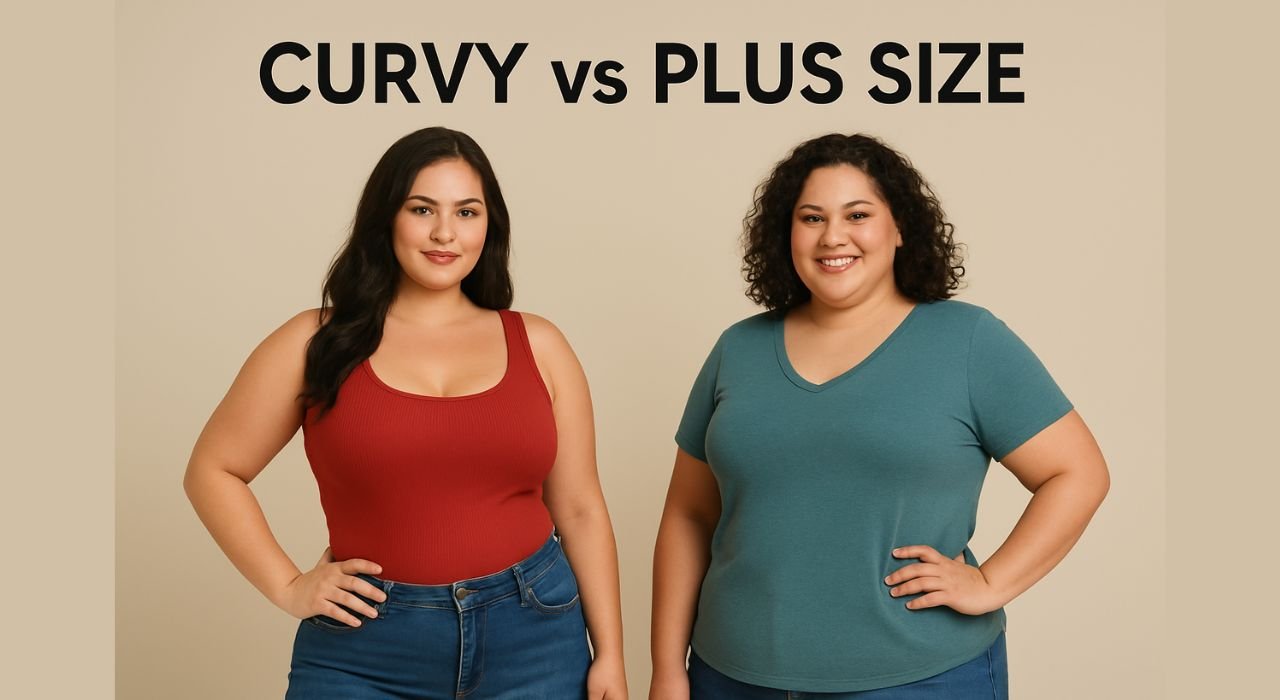
In the world of fashion and body terminology, two words are often used interchangeably: curvy and plus size. Many women assume they mean the same thing — but they don’t. One refers to body shape, while the other refers to clothing size. Understanding this distinction not only helps you describe your body more accurately, but also empowers you to choose clothes that fit better and flatter your natural silhouette.
This complete guide breaks down the meanings, measurements, myths, and fashion insights behind both terms. Whether you’re navigating online clothing descriptions, exploring body positivity, or simply curious about where you fit, this article will help you understand everything clearly.
“Curvy” describes a body shape, not a size.
A curvy body is defined by proportion, especially:
The three body shapes most commonly referred to as curvy are:
Curvy people can be slim, mid-size, or plus size. The keyword is shape, not weight.
Curvy women can be any size, from size 2 to size 22.
Pear-shaped and full-bust shapes are also considered curvy.
Curves appear differently on every body and aren’t defined by perfection.
“Plus size” refers to clothing size, not shape**.
It is used for women whose body measurements fall beyond standard sizing.
Plus-size women come in all body shapes — hourglass, apple, rectangle, pear, and inverted triangle.
Different brands use unique size charts. For example:
This can make shopping confusing — which is why understanding your body measurements is far more accurate than relying on “size labels.”
Here is the simplest breakdown:
| Feature | Curvy | Plus Size |
|---|---|---|
| Meaning | Body Shape | Clothing Size |
| Based On | Proportions (waist–hip–bust) | Measurement numbers |
| Size Range | Any size (0 to 30+) | Typically 14/16+ |
| Body Types | Hourglass, pear, full bust | All body types |
| Example | Slim but hourglass = Curvy, not plus size | Apple-shaped size 18 = Plus size, not curvy |
✔ Curvy but not plus size
✔ Plus size but not curvy
✔ Both curvy and plus size
✔ Neither (straight body shapes)
Fashion specialists often use two standard measurements:
A person is typically considered curvy if:
Waist is at least 25% smaller than hips
Example:
Curvy bodies usually follow the pattern:
If your bust and hip measurements differ by less than 5%, and your waist is significantly smaller, you likely have a curvy silhouette.
You are plus size if your clothing size falls beyond standard-size ranges.
(Note: Approximate ranges vary by brand.)
You can be:
Plus size only describes size, not silhouette.
Understanding body shapes helps clarify the difference between curvy and plus size. Here are the main types:
Only hourglass and pear shapes are typically classified as curvy.
Both “curvy” and “plus size” have been misunderstood for years. Today:
The goal is not to box people into categories — it’s to help women feel empowered, not confused.
These fabrics mold to your curves without adding bulk.
Structured fits, not oversized ones, create a polished silhouette.
These create length and balance.
Here are the latest style trends reshaping the fashion industry:
Blazers with cinched waists and tapered pants.
Wraps, asymmetric hems, and stretchy knits.
High-quality T-shirts, seamless bodysuits, fitted tees.
Curvy-fit and tummy-control denim.
Vibrant florals, monochrome outfits, metallic accents.
These trends celebrate curves while ensuring comfort.
No — curvy is about shape, not size.
Many plus-size bodies are straight or apple-shaped.
You can — proportions define curves.
Size is not a measure of health.
Fitness, diet, genetics, and lifestyle matter more.
Use curvy when referring to your body shape.
Use plus size when referring to your clothing size.
Neither term is “better.”
Both describe different aspects of your body — shape and size.
Understanding both helps you shop smarter, dress confidently, and communicate your body type clearly.
Size 12 is typically curvy or mid-size, not plus size.
Yes — curvy slim women exist and often wear sizes 2–8.
No — plus-size bodies come in all shapes.
“Thick” usually refers to fullness in thighs/hips; “curvy” refers to body proportion.
Hourglass is the most popular form of curvy, but pear shapes also count.
The confusion between “curvy” and “plus size” has existed for decades. But the truth is simple:
You can be one, both, or neither — and all bodies are valid.