Physical Address
304 North Cardinal St.
Dorchester Center, MA 02124

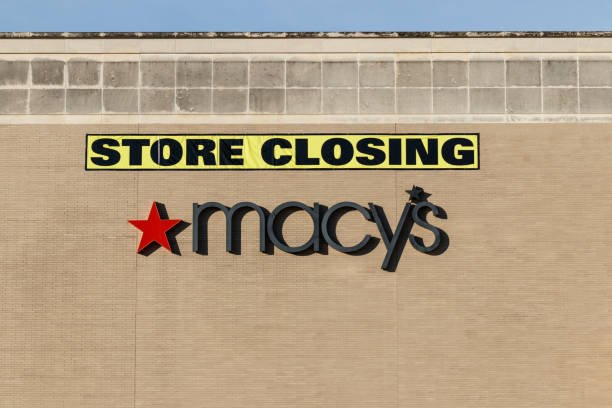
For more than 160 years, Macy’s has been a symbol of American retail — from its flagship store in Herald Square, New York City, to hundreds of department stores across malls and shopping centers nationwide. Known for its iconic Thanksgiving Day Parade, seasonal window displays, and wide product selection, Macy’s has long been a staple for families looking for fashion, home goods, and gifts under one roof.
But in recent years, Macy’s has faced mounting challenges. Declining mall traffic, the rise of online shopping, and changing consumer preferences have forced the retailer to rethink its traditional department store model. In response, Macy’s announced a major restructuring plan, dubbed the “Bold New Chapter,” which involves closing approximately 150 underperforming stores by 2026 while reinvesting in digital channels, smaller-format stores, and luxury divisions like Bloomingdale’s and Bluemercury.
This wave of closures has left many shoppers asking:
In this article, we’ll dive deep into Macy’s store closures, answering all the most common questions people are searching for today — from which locations are affected to why these closures are happening, and what they mean for the future of retail in America.
Now that we’ve set the stage, let’s get to the heart of the matter: why is Macy’s closing so many of its stores?
The short answer is that Macy’s wants to cut back on locations that are no longer profitable and refocus its resources where customers are actually shopping today. But there’s more to the story.
For decades, Macy’s thrived as a mall anchor — the big department store that drew people in and supported smaller retailers around it. But mall traffic has been falling steadily as shoppers move toward online shopping and outdoor lifestyle centers. Many of the stores Macy’s is closing are in struggling malls with declining foot traffic, making it hard for them to stay profitable.
E-commerce has changed the way people shop. Instead of heading to a mall to browse, more customers now prefer the convenience of shopping from home. While Macy’s has invested heavily in its website and app, maintaining hundreds of large physical stores became increasingly costly compared to the return they generated.
Macy’s is not alone. Over the past decade, we’ve seen thousands of closures from Sears, JCPenney, Bed Bath & Beyond, and more. Industry analysts often call this trend the “retail apocalypse” — not because retail is dying, but because it’s transforming. Stores that don’t adapt quickly enough to changing consumer habits face downsizing or closure.
Macy’s leadership calls this restructuring a strategic reset. Instead of propping up underperforming stores, they are redirecting investments into areas with growth potential:
In short, Macy’s closures aren’t just about cutting losses — they’re about reshaping the company for the next generation of shoppers.
Once shoppers learned about Macy’s “Bold New Chapter” strategy, the immediate question was: just how many stores are on the chopping block?
Macy’s has confirmed that it plans to close about 150 underperforming stores by the end of fiscal 2026 (January 2027). These closures are being phased over several years rather than happening all at once, giving the company time to manage liquidation sales, employee transitions, and community impacts.
By mid-2025, Macy’s picked up the pace:
Interestingly, Macy’s had already closed 64 stores by the end of 2024, before officially rolling out the Bold New Chapter plan. This shows how aggressively the company is moving to shrink its footprint.
While headlines focus on closures, it’s worth noting that Macy’s isn’t pulling out of retail altogether. The company is consolidating around a “go-forward fleet” of about 350 stronger-performing Macy’s stores nationwide. These are locations with high sales volume, strong community demand, or strategic importance.
Numbers tell one story, but for many shoppers the more personal question is: “Is my Macy’s on the list?”
Macy’s has confirmed more than 150 store closures nationwide, with shutdowns spread across 22 states. Below, we’ve compiled a detailed list of confirmed closures, organized by state, so you can check if your local store is affected.
California
Florida
Texas
New York
(Closures are also happening in other states such as Ohio, Illinois, Pennsylvania, and New Jersey. More stores are expected to be announced in waves through 2026.)
If you see signs of “Store Closing” clearance sales in your local Macy’s, it usually means the store will shut within 8–12 weeks. During this time, prices are heavily discounted and inventory gradually thins out until the location closes permanently.
Knowing which stores are on the list is just half the story—the next big question shoppers are asking is: “When will my Macy’s actually close?”
Macy’s closures are happening in phases, not all at once. Here’s the general timeline:
If your local store is on the closure list, here’s how the process usually unfolds:
For shoppers hoping to grab deals, it’s best to shop early in the sale for the widest selection, but wait until the final weeks if you’re hunting for deep discounts on remaining stock.
One of the most immediate and human impacts of Macy’s store closures falls on its employees. Every time a location shuts down, workers face uncertainty — from job loss to relocation. Here’s what we know so far:
Macy’s closures affect thousands of employees nationwide, including sales associates, managers, and support staff. While the exact number varies by store, large-format department stores can employ 100–200 people each, meaning the nationwide impact could reach into the tens of thousands by 2026.
Macy’s has stated that some employees may be offered transfers to nearby stores, particularly in metro areas where multiple Macy’s locations exist. However, in smaller towns or single-store markets, opportunities for relocation are limited.
For those who cannot transfer, Macy’s offers severance packages and outplacement support. While details vary depending on position and length of service, this is part of Macy’s commitment to easing the transition for displaced workers.
Macy’s has been notifying employees in advance when their store is set to close, typically giving several weeks’ notice. Clearance sales (which run 8–12 weeks) also keep staff employed temporarily before the final closing date.
With approximately 150 closures planned through 2026, tens of thousands of retail jobs are expected to be affected. The cuts are part of Macy’s broader restructuring plan, which also includes some layoffs at its corporate offices as the company streamlines operations.
When Macy’s shutters a store, it doesn’t just disappear — it leaves behind a massive retail space, often spanning 100,000–200,000 square feet. What happens next depends on the mall, the local economy, and developers’ vision for the future.
Across the U.S., many closed Macy’s locations are being repurposed into new uses. These can include:
In Corte Madera (Bay Area), Macy’s closed one of its long-standing stores, and the site is being considered for housing redevelopment. This reflects a growing trend where former retail giants pave the way for much-needed residential projects.
Macy’s has traditionally been an anchor tenant — the big department store that drives foot traffic to smaller mall shops. When an anchor leaves:
These transformations highlight a broader retail shift: large department stores are giving way to community-driven spaces. While the closures may initially feel like losses, they often spark opportunities for reinvention in local economies.
Despite the wave of closures, Macy’s isn’t retreating from retail entirely — it’s shifting its strategy. Instead of relying on massive, traditional department stores in malls, Macy’s is betting on smaller, more specialized formats and its luxury banners.
Macy’s is rolling out off-mall, smaller-format stores that are about one-fifth the size of a traditional department store.
Macy’s parent company is doubling down on its luxury and beauty segments:
A new Macy’s small-format store is set to open at Midway Crossings Mall in Miami, Florida, showing how the brand is repositioning itself in key urban areas while closing down underperforming mall-based locations.
This strategy signals Macy’s isn’t giving up — instead, it’s reinventing itself for a retail world that values convenience, niche experiences, and luxury appeal. While big-box closures grab headlines, these smaller and more profitable stores may shape Macy’s future identity.
For regular Macy’s shoppers, store closures might feel unsettling — especially if your local Macy’s is on the closure list. But the company has made it clear that shopping benefits and access to products will continue through other locations and online. Here’s what you need to know:
Macy’s is heavily investing in digital shopping, making the app and website central to the customer experience.
If your local store closes:
Macy’s closures are more than just a shift in shopping options — they have ripple effects on local economies, malls, and the retail landscape as a whole.
Macy’s store closures don’t mean the brand is fading away — instead, the company is pivoting toward a new model of retail. This transformation is guided by what Macy’s calls its “Bold New Chapter” strategy, designed to keep the brand profitable and relevant in the next decade.
Is my Macy’s store closing?
Macy’s is closing about 150 stores by 2026. Check our updated list to see if your location is included.
Why is Macy’s closing stores?
Because of declining mall traffic and rising online shopping, Macy’s is shutting underperforming stores to focus on stronger markets.
Will Macy’s go bankrupt?
No. Macy’s is financially stable — closures are part of a restructuring strategy, not bankruptcy.
Can I still use my Macy’s gift cards?
Yes. Gift cards remain valid online and at all open Macy’s stores.
What happens to Macy’s employees?
Employees may receive severance pay, transfers, or support finding new roles within Macy’s brands.
What was Macy’s CEO Tony Spring’s message about the store closures?
Tony Spring said the closures target underperforming stores “built for a different era,” allowing Macy’s to focus on profitable locations, digital growth, and luxury expansions.
Macy’s store closures may feel like the end of an era, but they don’t signal the end of the brand. Instead, Macy’s is reshaping itself for the future — moving away from sprawling department stores and toward smaller, more profitable formats, luxury (Bloomingdale’s), and beauty (Bluemercury).
For shoppers, this means fewer local stores but more digital convenience and better-curated experiences where Macy’s remains. For communities, it’s the challenge of filling large empty spaces — but also an opportunity for new housing, entertainment, and retail concepts.
The big takeaway? Macy’s isn’t collapsing — it’s reinventing. And how well it balances tradition with transformation will decide its place in the future of U.S. retail.