Physical Address
304 North Cardinal St.
Dorchester Center, MA 02124
Physical Address
304 North Cardinal St.
Dorchester Center, MA 02124

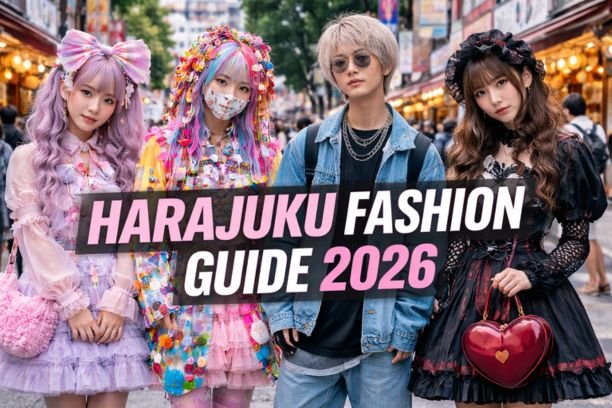
Harajuku has long been the symbolic heart of Japanese street fashion, but in 2026, it is no longer just a tourist spectacle or a memory frozen in 2000s fashion magazines. Today’s Harajuku fashion is more layered, more wearable, and more culturally reflective than ever before.
This guide explores what Harajuku fashion really looks like in 2026, how it has evolved over the decades, which styles dominate the streets today, and where you can experience it firsthand. Whether you’re a fashion enthusiast, traveler, or content creator, this is a grounded, up-to-date look at Harajuku’s living fashion culture.
In 2026, Harajuku fashion is best understood as a creative ecosystem rather than a single style. It represents freedom of expression, experimental layering, and the blending of subcultures rather than exaggerated costumes worn every day.
Modern Harajuku fashion emphasizes:
While the extreme outfits of the early 2000s still exist, they now appear mostly on weekends, at events, or for social media. On weekdays, Harajuku fashion leans toward expressive but wearable street style.
Harajuku fashion gained global attention in the late 1990s and early 2000s, when bold subcultures like Decora, Gothic Lolita, Visual Kei, and Kogal dominated the streets around Takeshita Street.
2000s Harajuku Fashion:
Harajuku Fashion in 2026:
Social media, rising living costs, and cultural maturity have transformed Harajuku from a shock-value destination into a hub of thoughtful self-expression.
Rather than one dominant trend, Harajuku in 2026 showcases multiple coexisting styles. These are the most visible and influential.
Kawaii fashion remains a defining element of Harajuku, but it has evolved beyond purely childlike aesthetics.
Key characteristics:
Modern Kawaii often blends with Y2K, genderless fashion, or minimalist silhouettes, making it more adaptable to daily wear.
Decora Kei is no longer about overwhelming excess—it has matured into a more curated form of maximalism.
Modern Decora in 2026 includes:
Decora now appears frequently during weekends and fashion events rather than as an everyday uniform.
Lolita fashion continues to thrive in Harajuku, but its modern form is significantly more wearable.
Neo-Lolita styling includes:
This evolution allows Lolita fashion to coexist with contemporary streetwear rather than stand apart from it.
Genderless fashion has become one of the most important forces shaping Harajuku style in 2026.
Common elements include:
Harajuku has played a major role in normalizing gender-fluid expression, influencing broader Japanese fashion culture.
Harajuku fashion is not confined to one street. Understanding where to look makes a significant difference.
A common misconception is that everyone in Harajuku dresses in extreme outfits every day. In reality:
What people actually wear:
What stereotypes exaggerate:
Harajuku fashion today is about balance between creativity and comfort.
Harajuku’s impact extends far beyond Tokyo.
Many global streetwear and high-fashion trends trace their roots back to Harajuku’s experimental culture.
Harajuku is no longer about shock or spectacle—it is about creative freedom. In 2026, it remains relevant because it adapts without losing its soul.
By embracing change, sustainability, and individuality, Harajuku continues to define what street fashion can be—not just in Japan, but around the world.
For a broader look at Japanese style movements, explore our full guide to Japanese Fashion Trends 2026.